
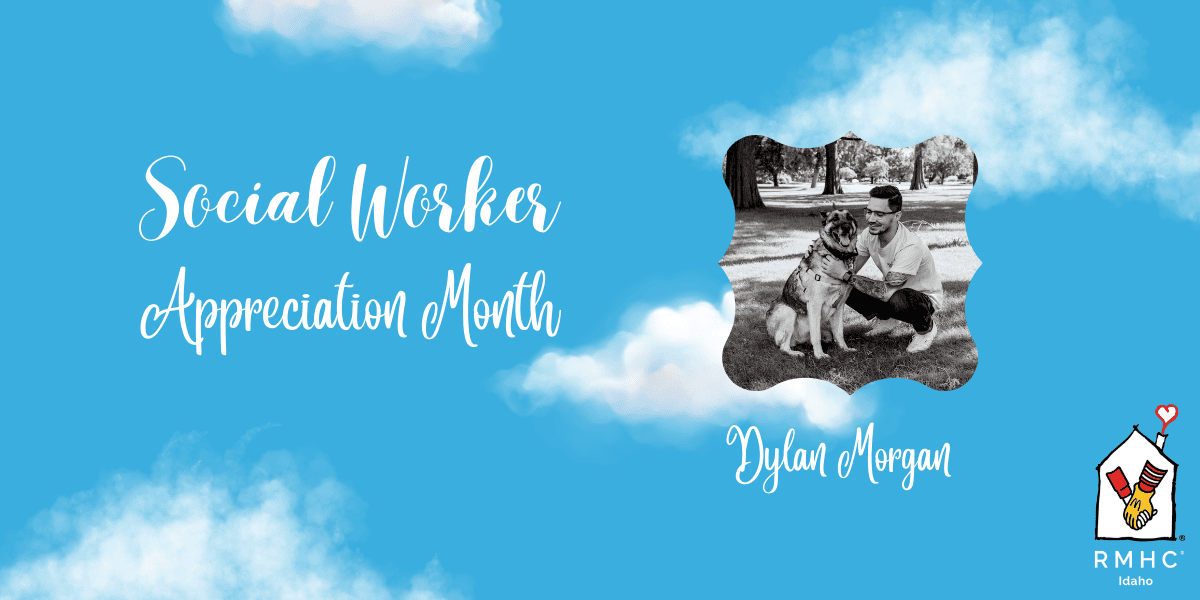
Dylan Morgan, LMSW, is an Adult Inpatient Psych Clinician at Cottonwood Creek Behavioral Hospital. His journey into social work began at Boise State University, where he completed his undergraduate internship at Ronald McDonald House Charities of Idaho. What started as a student placement quickly became something more. After earning his bachelor’s degree, Dylan moved into a staff role as a Family Services Specialist while completing his master’s degree. In total, he spent about two and a half years serving families at the House before transitioning fully into clinical work.
Dylan shares that he always knew he wanted to help people in some way. Growing up, he had strong, positive influences in his life, including a wrestling coach who had a lasting impact on him. That experience shaped his desire to be that steady presence for someone else when they needed it most. He believes everyone reaches a point in life when they need someone in their corner, and social work gave him a way to offer that support.
Today at Cottonwood, Dylan primarily works with adult patients, but when families at Cottonwood have children 18 and under receiving treatment, they are eligible to stay at the House (if they don’t live in Ada County) or participate in the day use program. In those cases, his coworkers help connect them to our services.
As a clinician, Dylan carries an individual caseload and completes psychosocial assessments for each patient assigned to him. He meets with them regularly during their stay, which typically lasts seven to ten days, and focuses on stabilizing acute symptoms. Many of the patients he serves are experiencing psychosis or suicidality. His role centers on helping them reach a place of stability and then coordinating discharge planning. That includes setting up follow up appointments, therapy, medication management, and any other supports needed to help them succeed after leaving the hospital.
When reflecting on his time at the House, Dylan speaks about the relief families felt walking through the doors. He remembers how powerful it was to tell parents they did not need to worry about where they would sleep or how they would afford it. Being able to remove that burden allowed them to focus entirely on their child. He saw firsthand how community donations made that possible, from welcome bags to meals to everyday essentials. The level of support from donors and volunteers left a lasting impression on him.
One memory that stands out is the first time he held a baby. A family who had been staying at the House for months encouraged him to hold one of their twins. He admits he had always been nervous to hold a baby, but in that moment, it felt meaningful. He had shared dinners with the family, heard their story, and walked alongside them for months. Holding that baby felt like being invited into something deeply personal. It was a reminder of the trust families place in the people around them.
Dylan continues to stay connected to the House and has returned to volunteer when he can. He also speaks openly about the importance of self care in a profession that requires so much emotional presence. Over time, he learned the importance of setting boundaries and fully stepping away when he is off the clock. Outside of work, he enjoys riding his street bike and dirt bike, spending time with his German Shepherd, and being outdoors.
Dylan is grounded in the belief that being present for someone in their most difficult moments can make a lasting difference. Whether he is stabilizing a patient in acute crisis or helping a family find their footing during a family member’s hospitalization, Dylan remains committed to being that steady presence when it is needed most.
